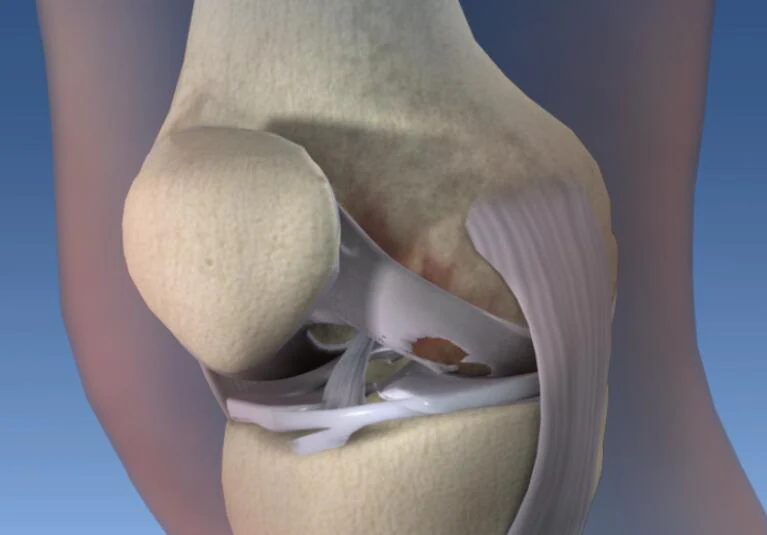
Articular cartilage injuries are a frequent challenge in sports medicine, particularly among athletes exposed to high-velocity twisting, pivoting and rotational forces. These stresses increase the likelihood of focal cartilage defects — areas that Craig H. Bennett, M.D., orthopedic surgeon at Mayo Clinic in Minnesota and team physician for the Minnesota Timberwolves, says can resemble "a pothole in what was previously normal cartilage."
Because articular cartilage has minimal regenerative capacity, even small defects can compromise joint mechanics and long-term function. According to Dr. Bennett, "the knee requires a change of environment to return to a functional extremity" when the body cannot restore cartilage on its own.
Why early evaluation matters
Although some defects may stabilize, Dr. Bennett emphasizes that they do not resolve spontaneously.
"Untreated, the deficiency will remain and often progress," he says.
Dr. Bennett encourages early consultation with an orthopedic knee specialist to determine whether nonsurgical management is appropriate or whether surgical intervention is needed to prevent further deterioration.
Nonsurgical treatment options
Dr. Bennett recommends beginning with conservative therapies when appropriate.
The common nonsurgical options include physical therapy and knee injections. The injection options are:
Biologic injections: These include platelet-rich plasma (PRP), bone marrow aspirate concentrate (BMAC) or stem cells.
Viscosupplement injections.
Corticosteroid injections.
While these injections can reduce symptoms and slow progression, they do not replace lost cartilage.
"Injecting the knee may decrease propagation of the defect, but it won't convert the damage to normal cartilage," Dr. Bennett explains. "With biologic injections, the knee may form scar type cartilage called fibrocartilage, but not normal articular cartilage."
Viscosupplement injections lubricate the area and can reduce symptoms for a period of time. Dr. Bennett describes the viscosupplement injections as "a type of knee oil job."
Corticosteroid injections can decrease pain and inflammation. However, corticosteroid injections may decrease the knee's ability to form scar cartilage. Dr. Bennett does not recommend cortical steroid injections for cartilage lesions.
Doctor Article
Articular cartilage damage: Nonsurgical and surgical solutions at Mayo Clinic
Read other articles
3 suggestions
New AI method tracks immune responses without known antibody databases
A research team comprising Associate Professor FUNAKOSHI Yohei, Associate Professor YAKUSHIJIN Kimikazu, Professor MINAMI Hironobu, and Associate Professor OHJI Goh of...
Articular cartilage damage: Nonsurgical and surgical solutions at Mayo Clinic
Articular cartilage injuries are a frequent challenge in sports medicine, particularly among athletes exposed to high-velocity twisting, pivoting and rotational forces...

Efficacy of perifracture site injections for pain control following distal radius and ankle fracture surgery: a meta-analysis of randomized controlled
Surgical site analgesic injections are used as part of multimodal analgesia in elective orthopedic surgery, but their effectiveness in orthopedic trauma surgery, parti...